Pedagogy is a slippery word. For those of us who work in education faculties at universities, it is a concept which has become somewhat devalued by particular association with narrow kinds of teaching methodology. Most especially, this association is with a version of the original Russian Constructivist theory which seems to take all the interesting and radical aspects out of Lev Vygotsky’s educational vision. Alas! But for others, pedagogy is a much more profound concept and vision, associated with education as a process of humanisation and of self and collective development and flourishing. I was reminded of this at a recent academic visit to Istanbul, Turkey for the Critical Pedagogy Congress (Congress II). For educators and teachers in Turkey, for example, the Critical Pedagogy tradition of thought (associated with the Brazilian philosopher Paulo Freire originally and developing through others such as Augusto Boal and bell hooks) is a deep and powerful resource for evolving debates in education and politics, which has a strong critical and emancipatory aspect.
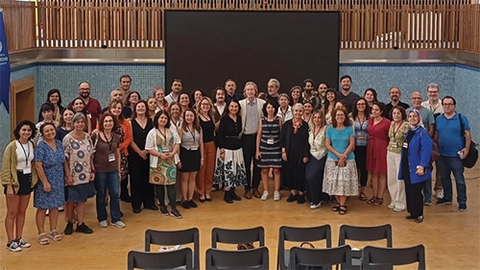
Figure 1. Delegates at the Second Critical Pedagogy Congress (Critical Pedagogy for Hope, Solidarity and Social Transformation) in Istanbul, Turkey, on 11th and 12th September 2026.
Many of the Critical Pedagogy thinkers are also associated with writing in poetry and in literature more generally. bell hooks (lower case essential), for example, is perhaps more well known for her memoirs and existential texts than for her educational writings. Boal’s translation of Freire’s original vision is through a Theatre of the Oppressed, which adopts complex and subtle models of expression to articulate forms of hidden and silenced oppression, often working with young children to scaffold their articulation of alienated experience. Ernesto Cardenal, as a Nicaraguan Catholic priest and Trappist monk, developed Critical Pedagogy more in the direction of (Latin American) Liberation theology, but was also an acclaimed poet. My poem, ‘Blue Green World’, cites the inspiration of Cardenal alongside Boal and Freire:
Blue Green World (excerpt)
here we are swimming in the giant waves
of the beautiful Irish sea looking out to the Americas
not towards Orange Face and his utter foolishness
but to Ernesto Cardenel Freire and Boal
voices of the oppressed but courageous
liberation wears a face that looks and tastes like this (Irwin 2026).
There is a great energy and creativity across this hybrid inter-action of poetry and education. At the conference, Professor Antonia Darder (also a poet, who develops her Puerto Rican heritage as part of this), one of the leading Critical Pedagogy philosophers in the world, gave an inspiring keynote on her ground-breaking work, connecting back to her own co-operation in pedagogy and politics with Paulo Freire, bell hooks and others. My own keynote address focused on the topic of ‘In Keeping With The Times – Re-Envisioning Critical Pedagogy Now’, exploring how some of the changes in Freire’s later work might connect to some recent emergent Student Protest movements in Ireland, UK, Greece and elsewhere. I have previously written critical philosophy essays and poetry about these student movements, for example, those specific Leftist and Anarchist groups I interviewed at the Aristotle University of Thessaloniki.
Student Revolt Thessaloniki Haikus (excerpt)
I interviewed Alexis
Who told me about riots
– against the privatised University
At Aristotle Thessaloniki
Anarchists stage an occupation
– no to commercial education
Students repainted Guernica
To avoid the same fate
– it hangs in the Rectorate (Irwin 2025).
But in speaking of ‘Re-envisioning Critical Pedagogy Today’ as an emphasis on a renewed contemporaneity, how might pedagogy and poetry coincide and co-operate today in our rather divided world? hooks, in her poetry, speaks to an ‘open door’, which may seem somewhat naively optimistic in our current societal circumstances:
in love
there are no closed doors
each threshold
an invitation
to cross (hooks 2007).
hooks, in her more overtly pedagogical work (for example, her seminal text Teaching to Transgress [hooks 1994]) addresses some of the inherent challenges to this optimism. Sometimes, the educators themselves are the problem: ‘Education as the practice of freedom was continually undermined by professors who were actively hostile to the notion of student participation’ (hooks 1994: 14). hooks’ own work thematises this problematic educator role both more structurally and institutionally but also on a personal and experiential level. Her analysis takes an inspiration from (while also building on and somewhat critiquing) the critical pedagogy of the Brazilian educator Freire.
Most paradigmatically, Freire’s 1968 text, Pedagogy of the Oppressed, delineates the dynamics of so-called banking education and a specific powerplay of ‘sadism’ which the hierarchical educator can employ as a domination strategy over students (Freire 1996). The Italian Marxist Antonio Gramsci spoke of ‘pessimism of the intellect, optimism of the will’. At the conference in Istanbul, this dual mandate was much in evidence, as Turkish educators struggle with an increasingly draconian Islamist movement in government, curtailing spaces of expression and of freedom. This vehement anti-progressivism is much in evidence in the city of Istanbul, in the very aggressive police presence and the forced closure of LBGTQ+ centres and the imprisonment of activists. There is a great tragic irony in this happening in the great old city of Constantinople, a wonderful unique meeting of East and West worlds. Walking through this extraordinary city, one is struck by the immense hospitality of Islam as a religion, as one is invited to enter the beautiful and myriad mosques of the city, to stand alongside (if separated from) worshippers and those in prayer. This tradition reminded me of the great Spanish city of Cordoba, which in Moorish times, was similarly a place of great pluralism and affirmation of difference (cultural and religious). In medieval Cordoba, Muslim peoples worked and lived alongside Jewish, Christian, and secular peoples in relative harmony and co-existence.
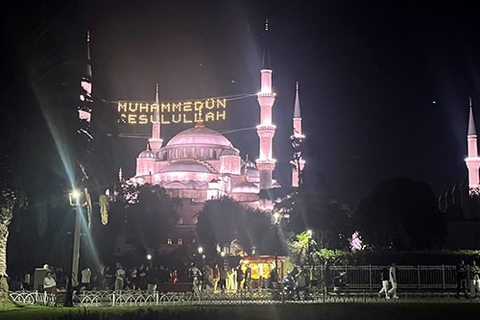
Figure 2. The Blue Mosque, Istanbul, September 2026.
This tradition of Islamic hospitality is also the ‘open door’ of which hooks speaks. Of course, this friendly and generous openness is often slammed shut. One aspect of the Istanbul conference that was especially enlightening to me was to talk to Kurdish delegates, who feel both ‘at home’ and ‘in exile’ in Turkey, and who are often subject to government and police oppression. Istanbul is the city with the largest representation of Kurds in the world. Kurdish poetry is especially powerful in its lamentation of this plight of its peoples, often scattered across the globe away from their original and spiritual Kurdistan homeland, but which makes alignment with progressive poetries and pedagogies. One such example is the poetic tributes to the African American singer, actor and civils rights activist Paul Robeson by the two of the most prominent 20th-century Kurdish poets, Abdulla Goran and Cegerxwîn, who wrote in the two main dialects of the Kurdish language: Sorani and Kurmanji. Here is an extract from Cegerxwîn’s poem:
Oh comrade Robeson, the singer of the world
The supporter of peace, the wise and human being
The hero and the guide [rênas], the enemy of Dallas
Over waters, over mountains
Your black color reaches our eyes
Your beautiful voice well reaches our ears
This work of yours gives us knowledge / talent (Cegerxwîn 1954).
This poem is a tribute to Robeson, as a solidarity in terms of their (Cegerxwîn and Goran’s) respective and aligned radical humanist, anti-racist and anti-colonial political stances. Once more, we see that poetry can be pedagogical and political, and connected overtly to progressive political movements fighting in solidarity for civil rights (even it doesn’t have to be). Does poetry need to have a (social) conscience? Well, sometimes at least, most definitely yes! Laurence Ferlinghetti makes some humorous notes on this tension between poetry and ideology when he discusses how ‘I am put down by Beat Natives who say that I cannot be beat and ‘committed’ at the same time . . . only the dead and the junkie don’t care, they are inscrutable . . . Jean Paul Sartre cares and has always hollered that the writer especially should be committed. Engagement is one of his favourite dirty words’ (Ferlinghetti 1959).
We might say likewise, following in the dirty slipstream of Sartre and Ferlinghetti. At the Istanbul conference, delegates spoke warmly together of the need for such contemporary solidarity, which can enable teachers and students to renew hope and agency as they seek to enable child development in schools, as well as connecting to progressive movements in wider society. Professor Darder, myself and others spoke to the need to look to Critical Pedagogy and to Paulo Freire (alongside related thinker activists such as the aforementioned bell hooks) not as fixed schools of ideas but as a contextual and political critique of some of the most damaging aspects of our education systems and relationships. As well as a philosophy, we can also see the poetry of such writings and ideas. This is one example of a space where poetry and pedagogy can meet and enter into dialogue and creativity at the present time.
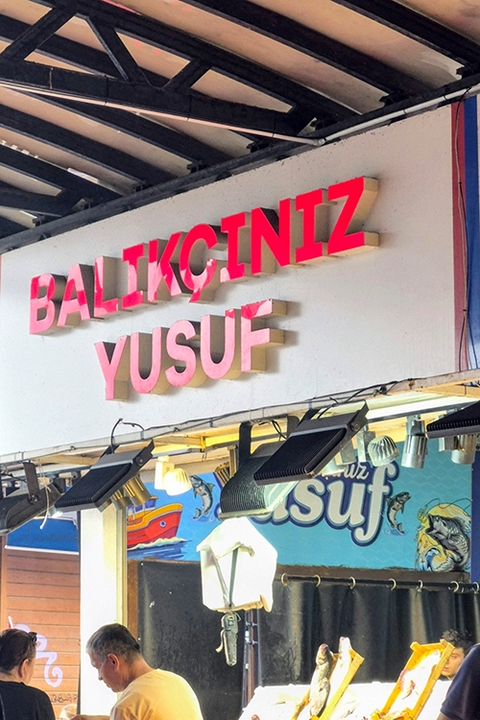
Figure 3. Istanbul Kumkapi Fish Market, at the foot of the Galata Bridge, along the northern shore of the Sea of Marmara, September 2026.
I was reminded of the urgency of such work when my interpreter at the conference failed to appear on the Saturday morning for my talk. As a group, we were worried for his welfare and later that day discovered that he had to flee the city (and country) in order to avoid the police raids that evening which targeted Leftist and LGBTQ+ support groups. As we sat and discussed such issues at the Congress in the shadow of the dominant portrait of Mustafa Kemal Atatürk, founding father of the Republic of Türkiye as a secular Republic, it was clear to us unequivocally that pedagogy and poetry both have a crucial role to play in resistance (and for hearts and minds) against the current narrowing of thought, hospitality and dialogue in our shared cultures. I conclude below with a poem inspired by my stay in the wonderful and pluralist city of Istanbul:
Istanbul Fish Market
Yusuf is shouting loud
in Wellington boots while
fish blood mixes across
the slippy floor with the fresh water
they keep relentlessly hosing on the produce
it is Tuesday and we are leaving this
extraordinary city
later but first we must visit the Blue Mosque
for me to wear my first dress
and you to wear your pretty scarf
and return to Yusuf’s fine place
for sardines and what they call tuna
although it tastes as good it isn’t exactly that
at least West of here but this is of course
East
of Europe the continent and facing
towards Asia
don’t forget it comrade and later the police
vans are everywhere near Taksim Square
I wonder if it is a Galatasary match but no it definitely isn’t that
instead the government forces are trying to round up the subvert queers and queens
which retrospectively casts light on the disappearance of my rather fey translator from the
Marxist conference yesterday
who apparently is now hiding in Northern Greece (wishing him my very best)
and convert them all through none too subtle therapy to family mores
which let’s face it seems more than a little ambitious
if only any of these naïve if nonetheless well shielded police thugs
had ever read
Heraklitus the original Turk from Ephesus
or had ever taken their precious sacred time to consider
his contradictory fragments
Figures
1.Delegates at the Second Critical Pedagogy Congress (Critical Pedagogy for Hope, Solidarity and Social Transformation) in Istanbul, Turkey, on 11th and 12th September 2026.
2.The Blue Mosque, Istanbul, September 2026.
3.Istanbul Kumkapi Fish Market, at the foot of the Galata Bridge, along the northern shore of the Sea of Marmara, September 2026.
References
Cegerxwîn (1954) ‘Heval Pol Robson’ in Dîwan.
Ferlinghetti, Laurence (1959) ‘I am put down by Beat natives’ in ‘Poetics’, The New American Poetry, edited by Donald Allen. University of California Press, Los Angeles.
hooks, bell (2007) when angels speak of love. Atria Books, New York.
Irwin, Jones (2025) Deep Image. Tofu Ink Arts Press, San Francisco.
Irwin, Jones (2026) More American Haikus. Moonstone Press, Philadelphia.
Roberts, Luke (2024) Living in History: Poetry in Britain, 1945 – 1979. Edinburgh University Press, Edinburgh.