The recent death of English avant-garde poet and Cambridge don, J. H. Prynne, calls for an appreciation of the singularity of Prynne’s contribution to poetry and poetics. This contribution extends in many directions, but our focus here will be on one aspect, that of his interpretation and redeployment of the so-called ‘New American Poetry’ (emerging paradigmatically with Donald Allen’s original anthology [Allen 1960]).
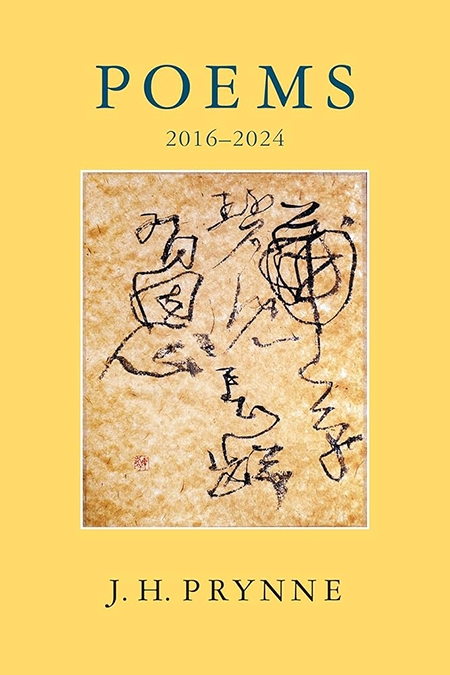
In an essay from 1999, Mengham and Kinsella contextualise the singular significance of Prynne: ‘J. H. Prynne is possibly the most significant English poet of the late twentieth century. A lyrical experimentalist, his work has mesmerised and attracted readers from around the world for three decades’ (Mengham and Kinsella 1999). This mesmerism isn’t always attractive to mainstream readers and the recent obituaries all refer to the intrinsic ‘difficulty’ of the works and their alienation from the mainstream publishers of poetry. Mengham and Kinsella, acknowledging a certain obscurity in the poetics, trace this from the eclecticism and originality of the influences, which while being of a tradition that stretches back to Wordsworth is also ‘linguistically innovative and strongly influenced by poetic languages outside the traditional English poem – be they those of Ed Dorn or Charles Olson, contemporary Chinese poetry, or the theories of Martin Heidegger’ (Mengham and Kinsella 1999). Prynne’s connection to Chinese poetics and philosophy is singular in UK poetry and gives his work a very distinctive flavour (note the Chinese characters or ‘logographs’ on the cover of his Bloodaxe anthology in Figure 1).
At the heart of this inspiration is a distinct conception of the structure of the self (varying from more Westernised sources), which also brings Prynne close to the American Haikus of Kerouac and the influence of Buddhism on American poetics. Within the more specifically Chinese tradition of philosophy, one can refer to the vision of ‘nourishing the heart’ (xiu yang 修養), for example within the Mengzi (Machek 2025: 31ff.) and Zhuangzi schools of metaphysics (Machek 2025: 51ff.). This foundational emphasis on xiu yang 修養 unites the Chinese traditions from Confucius on to Daoism and is grounded in a concept of a differentiated self which requires aspiration and effort to evolve and self-realise towards improvement. This process of self-challenge and evolution is also central to Prynne’s vision of poetry, as connected to ancient sources of philosophical wisdom. It also connects Prynne’s vision to more Eastern inflected philosophers of the twentieth century such as Martin Heidegger and Jacques Derrida. Derrida’s method of ‘deconstruction’ seems to me to be close in spirit (and practice) to the labyrinthine and sometimes obscurantist methodology of Prynne (the poet has overtly acknowledged these influences).
Prynne’s poetry is also unusually ideological and political, in the best sense of those words, with his oeuvre maintaining a visceral critique of contemporary capitalism right through his myriad pamphlets of the last decades. Indeed, his mode of production of texts is intrinsically connected to his political vision, many are effectively xeroxed pamphlets (sometimes noted as ‘Cambridge, privately printed’) which emerge from the photocopier in Cambridge library (Prynne is also a librarian). Mellors argues that this is also integral to the very content of the poetry itself in Prynne and likeminded poetic kin of the ‘new British poetry’; ‘The ‘esoteric’ small presses are not simply low-status, low-budget imitations of genuine publications, they are ‘underground’, chthonic forces disseminating the coded texts of poetry cabals. Underground production goes hand-in-hand with obscurantist verse pitted against orthodox media and revealed modes of artistic expression’ (Mellors 2005).
This ideological component of the poetry is as slippery as the themes and content are, although we might say that the stabilised angle is that of a kind of heterodox and wilfully eclectic and free-spirited ‘Marxism’ or ‘Leftism’ (what Derrida calls a ‘spectral (or Gothic) Marxism’). Here, theme and angle coincide in Prynne’s conviction that poetry is not a matter of individual confession or subjective perspective. Rather, the self becomes formed in processes that are transsubjective and beyond individual grasp or perception.
Figure 1. Cover art for Poems 2016 – 2024 by J. H. Prynne (Bloodaxe, 2024).
In this, it is clear that the emergence of a new kind of postmodern poetics in America in the 1950s was instructive for Prynne’s own artistic formation, as it would be for several poets associated with what was to become the British poetry avant-garde in the 1960s and 1970s. This Anglo-American matrix of influence worked both ways at this juncture, with American poets also respectively taking on the influence of emergent British poetries and styles. Donald Allen’s seminal anthology from 1960, ‘New American Poetry’ [Allen 1960]), foregrounds the rebel triad of the Beats/Black Mountain/New York schools. Of those groupings, it seems to have been the Black Mountain poetics of Charles Olson and Ed Dorn which was the strongest strain of aesthetic influence on Prynne’s developing verse. In his overview text Living in History: Poetry in Britain 1945 – 1979 (Roberts 2024), Luke Roberts clarifies some of this aesthetic interchange. A Frank Knox Memorial Fellowship took Prynne to Harvard University in 1960, while Prynne’s students, Andrew Crozier and John Temple, went to SUNY Buffalo on Fulbright Fellowships in 1964. Coming in the other direction, the Black Mountain poet and critic (and close comrade of Charles Olson) Ed Dorn arrived to the United Kingdom on a Fulbright, to the University of Essex in 1965. While the towering figure of Olson was the earlier influence on Prynne, the later political radicalism in verse especially owes a bigger debt to the iconoclasm of Dorn as mentor.
In a 2017 interview with The Paris Review, Prynne acknowledges the seismic force on his poetics of the publication of the New American Poetry anthology from 1960 (Allen 1960): ‘I was seeing all this strong possibility in the Don Allen anthology. Being an author [i.e. his formation as a poet at Cambridge], certainly being a poet, was defensive and traditional and habit-forming, and Eliot and Yeats were the chief formative presences. Auden was around the place and was a slightly dangerous author. The Donald Allen anthology seemed to be a completely different world’ (Prynne 2017). This very specifically American ‘energy, wackiness and innovation’ was almost wholly absent from the more conservative and determined British poetry world which Prynne had been formed in, but his move to Harvard in 1960 would open his horizons significantly, and the poetry would never look back. Each of the three main schools of poetics which Allen foregrounds have distinctive and even internal differences. But what the Beats, Black Mountain and the New York School all share is precisely that energetics and wackiness which Prynne describes and which his own poetry would irreversibly mainline and seek to evolve over the next decades.
The Beats are of course the most famous of the triad of poetic subcultures. Gregory Corso (I include a reading of one of his short poems from YouTube above), arguably the greatest of the Beats (or my favorite, at least) captures the force of the revolution in a paradigmatic 1970s poem, ‘Columbia U Poesy Reading – 1975’ (Corso 1975), looking all the way back to the get-go: ‘What a 16 years it’s been . . . and good old Kerouacky / poofed into fat air . . . Al volleyed amongst Hindu gods / then traded them all for Buddha’s no-god . . . we early heads of present style & consciousness . . . a subterranean poesy of the streets . . . did climb the towers of the Big Lie / and boot the ivory apple-cart of tyrannical values into illusory oblivion / without spilling a drop of blood . . . / blessed be Revolutionaries of the Spirit’ (Corso 1975). Connecting especially with the Black Mountain school of poets, led by Charles Olson, during his American stay and developing a life-long friendship with Ed Dorn, Prynne would take these aesthetic visions originated by Kerouac and Ginsberg and bring them back to the United Kingdom and England for a new kind of revolutionary translation. In this, Prynne becomes one of the main figures in a counter-cultural movement of poetry (also referred to as the ‘British Poetry Revival’).
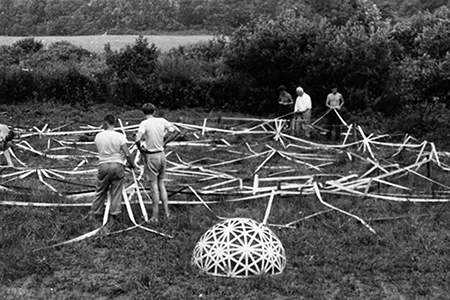
Figure 2. Supine Dome at Black Mountain College, North Carolina.
In a related key, an earlier critical essay of mine from ROR on the ‘Psychogeography of London’ explored the Anglo-American matrix of connections between William Burroughs and Iain Sinclair. Rather coincidentally, the poem I included in conclusion to that piece, entitled ‘Psychic Geography Haiku’, namechecks a certain occultic figure called ‘Undark’: ‘A character called Undark / secreting an occult text / under a long grey cloak’. ‘Undark’ is actually the name for a character in Sinclair’s novel Radon Daughters, who remains the exclusive holder of a mystical ‘horror’ text, whose reading provides some kind of divinatory powers linking the knowledge centres of Cambridge, Oxford and London’s Whitechapel. Sinclair has indicated that Undark is in fact an analogue for none other than J. H. Prynne himself, with Prynne representing some kind of shamanic figure for the British poetry underground. Sinclair has, of course, skin in this game in that his own anthology from 1996, Conductors of Chaos, brings together those avant-garde British writers who take their cue from that original matrix of Olson and Prynne from 1960 onwards (Sinclair 1996). And so the story goes on. Rest in Peace, good ol’ Jeremy Prynne, you really were a most inspirer and intelligencer! Thank you indeed for the poems.
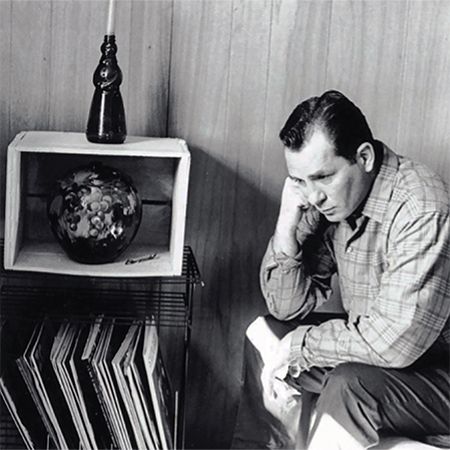
Figure 3. Jack Kerouac in a pensive mood (date and photographer unknown).
I conclude with a small cluster of my own poems which, in different ways, carry on the same lineage from Allen’s original anthological intervention. Note also that these connections are not just between poets but also between places or (alternative/radical) educational and artistic institutions. In an analogous manner to how the university of Vincennes was invented as an alternative haven after the May ‘68 events overwhelmed Nanterre and the Sorbonne, so too with the radical poets. In a similar manner to Gilles Deleuze and Judith Lacan teaching philosophy and psychoanalysis in a heterodox manner at Vincennes, so too Charles Olson at Black Mountain and Allen Ginsberg at Naropa, the first Buddhist University in the United States, would continue their revolutionary pedagogy.
In A Railway Station
A bunch of English fascists:
Broken eggs on a white plate
St George’s flags wrap around:
Thorny roses on a cut hand
Saturday late afternoon mid-September:
Kick off soccer nearly over
Clairvoyant shuffles the Tarot:
Outgoing Brighton dangerously late (Irwin 2025)
Seer Haiku
Speaking in tongues
Under the inspire
Charles Olson at Black Mountain
Ginsberg at Naropa Haiku
Rhyming Buddhism
For the West
Shining path
Olson at Black Mountain Sonnet
Teacher of poets and peers in this outback here
bring together the outsiders now insiders with
no real plan or steer. Paint a picture, Robert. Reece,
show us how to dance and think, not straight. John,
make the silence a music without forgiveness. Hilda,
can you take us away from shadows of Bauhaus, be lightness.
This be our new universe, going to class with Josef Albers.
School is out, except for thinking and being like this; slantwise.
Like Denise saying, Poetry is dead and listless,
come now we need to build a new Atlantis.
Among the Blue Ridge mountains, along the Shenandoah
river, catch a breath, say a prayer.
For Anarchism. Against states, against hate. Anarchists
want to diminish externals, increase internal power.
Figures
1.Cover art for Poems 2016 – 2024 by J. H. Prynne (Bloodaxe, 2024).
2.Supine Dome at Black Mountain College, North Carolina.
3.Jack Kerouac in a pensive mood (date and photographer unknown).
References
Allen, Donald [Ed.] (1960) The New American Poetry 1945 – 1960. University of California Press, Berkeley.
Corso, Gregory (1975) Columbia U. Poesy Reading – 1975 in Herald of the Autochthonic Spirit. New Directions Books, New York.
Creasy, Jonathan [Ed.] (2019) Black Mountain Poems. New Direction Books, New Jersey.
Irwin, Jones (2025) Some Poems from the Passionate Margins of the Alt-Left in Espacio Fronterizo (Borderland / Espace Frontière).
King, Matthew (2021) Bands Around the Throat.
Machek, David (2025) Self-Cultivation in Chinese and Greco-Roman Philosophy: Nourishing the Heart / Mind and Playing Roles. Bloomsbury, London.
Mellors, Anthony (2005) Late Modernist Poetics From Pound to Prynne. Manchester University Press, Manchester.
Mengham, Rod and Kinsella, John (1999) An Introduction to the Poetry of J. H. Prynne.
Prynne, J. H. (2011) Kazoo Dreamboats or On What There Is. University of Cambridge, Cambridge.
Prynne, J. H. (2017) Interview with J. H. Prynne – Jeff Dolven and Joshua Kotin in The Art of Poetry. The Paris Review, New York.
Roberts, Luke (2024) Living in History: Poetry in Britain, 1945 – 1979. Edinburgh University Press, Edinburgh.
Sinclair, Iain [Ed.] (1996) Conductors of Chaos. Picador, London.